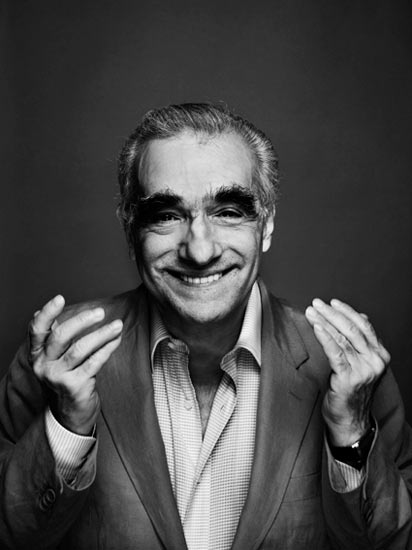
Martin Scorsese (November 17, 1942) is an American-Italian filmmaker, actor and historian, whose career spans more than 50 years. Part of the New Hollywood wave of filmmaking, he is widely regarded as one of the most significant and influential filmmakers in cinematic history. Scorsese’s body of work explores such themes as Italian-American identity, Catholic concepts of guilt and redemption, faith, machismo, modern crime, and gang conflict. Many of his films are also known for their depiction of violence and liberal use of profanity. In 1990, he founded The Film Foundation, a nonprofit organization dedicated to film preservation, and in 2007 he founded the World Cinema Foundation. He is a recipient of the AFI Life Achievement Award for his contributions to the cinema, and has won an Academy Award, a Palme d’Or, Cannes Film Festival Best Director Award, Silver Lion, Grammy Award, Emmys, Golden Globes, BAFTAs, and Directors Guild of America Awards.
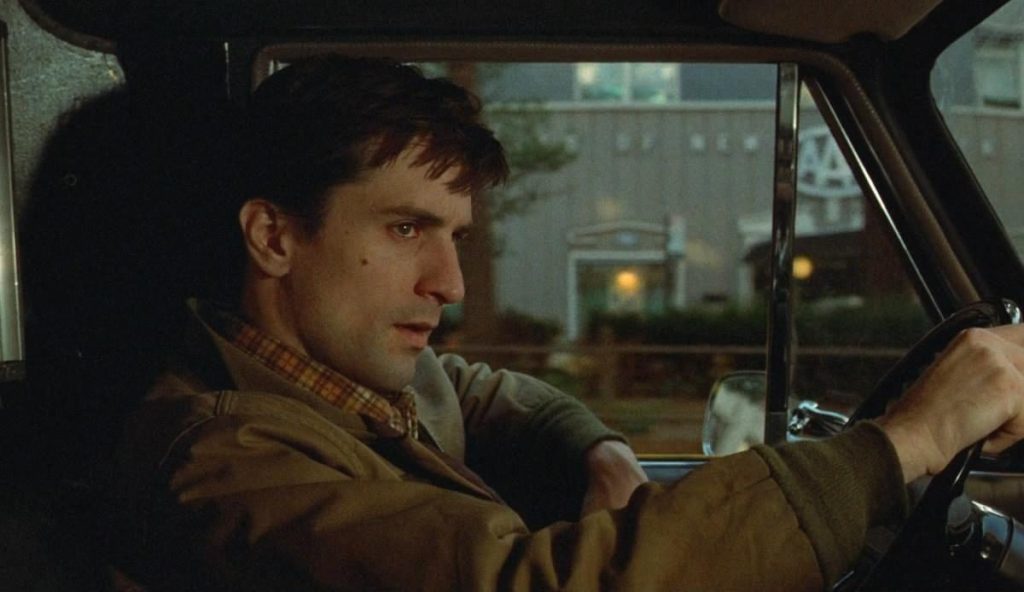
Taxi Driver (1976) is an American neo-noir psychological thriller film starring Robert De Niro, Jodie Foster, Cybill Shepherd, Harvey Keitel, Peter Boyle, Leonard Harris and Albert Brooks. Set in a decaying and morally bankrupt New York City following the Vietnam War, the film tells the story of a lonely taxi driver, who descends into insanity as he plots to assassinate both the presidential candidate (Harris) for whom the woman he is infatuated with (Shepherd) works, and the pimp (Keitel) of an underage prostitute (Foster) he befriends. A critical and commercial success upon release and nominated for four Academy Awards, including for Best Picture, Best Actor (for De Niro) and Best Supporting Actress (for Foster), Taxi Driver won the Palme d’Or at the 1976 Cannes Film Festival. The film generated controversy at the time of its release for its depiction of violence and casting of a 12 year old Foster in the role of a child prostitute. It is regularly cited by critics, film directors, and audiences alike as one of the greatest films of all time. In 2012, Sight & Sound named it the 31st-best film ever in its decennial critics’ poll, ranked with The Godfather Part II, and the fifth-greatest film of all time on its directors’ poll. The film was considered “culturally, historically or aesthetically” significant by the US Library of Congress and was selected for preservation in the National Film Registry in 1994.
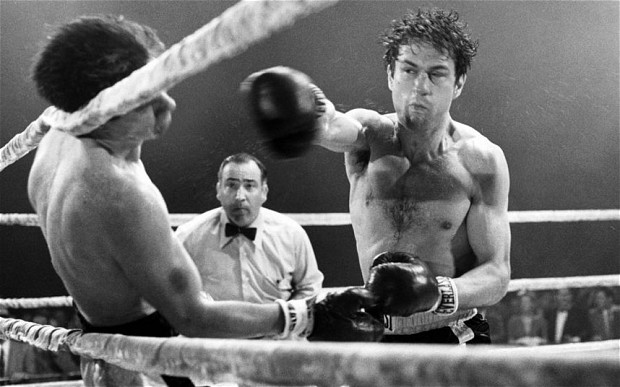
Raging Bull (1980) stars Robert De Niro as Jake LaMotta, an Italian-American middleweight boxer whose self-destructive and obsessive rage, sexual jealousy, and animalistic appetite destroyed his relationship with his wife and family. Also featured in the film are Joe Pesci as Joey, LaMotta’s well-intentioned brother and manager who tries to help Jake battle his inner demons, and Cathy Moriarty as his wife. Nicholas Colasanto, Theresa Saldana, and Frank Vincent all play supporting roles in the film. Scorsese was initially reluctant to develop the project, though he eventually came to relate to LaMotta’s story. Schrader re-wrote Martin’s first screenplay, and Scorsese and De Niro together made uncredited contributions thereafter. Pesci was an unknown actor prior to the film, as was Moriarty, who was suggested for her role by Pesci. During principal photography, each of the boxing scenes was choreographed for a specific visual style and De Niro gained approximately 60 pounds (27 kg) to portray LaMotta in his later post-boxing years. The film received mixed reviews upon its release; while De Niro’s performance and the editing were widely acclaimed, it garnered criticism due to its violent content. Despite the mixed reviews, the film was nominated for eight Academy Awards at the 53rd Academy Awards (tying with The Elephant Man as the most nominated film of the ceremony), including Best Picture and Best Director, and won two: Best Actor for De Niro (his second Oscar) and Best Editing. After its release, Raging Bull went on to garner a high critical reputation, and is now often considered Scorsese’s magnum opus and one of the greatest films ever made. In 1990, it became the first film to be selected for preservation in the National Film Registry in its first year of eligibility.
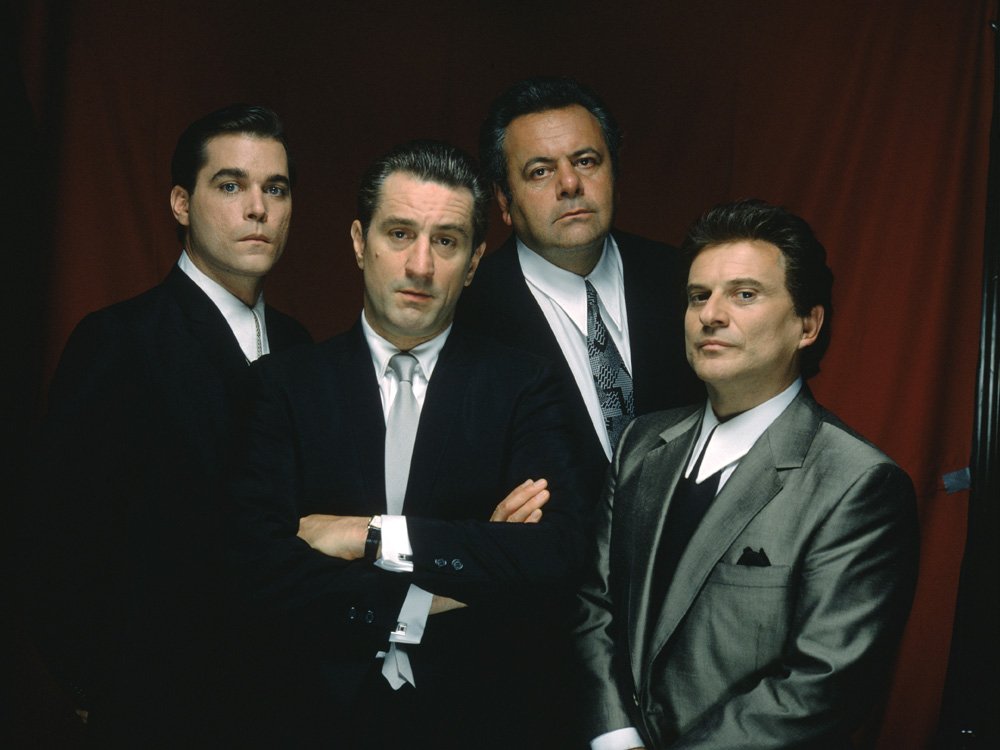
GoodFellas (1990) is an adaptation of the 1985 non-fiction book Wiseguy by Nicholas Pileggi, who co-wrote the screenplay with Scorsese. The film narrates the rise and fall of mob associate Henry Hill and his friends and family from 1955 to 1980. Scorsese initially titled the film Wise Guy and postponed making it; later, he and Pileggi changed the title to Goodfellas. To prepare for their roles in the film, Robert De Niro, Joe Pesci and Ray Liotta often spoke with Pileggi, who shared research material left over from writing the book. According to Pesci, improvisation and ad-libbing came out of rehearsals wherein Scorsese gave the actors freedom to do whatever they wanted. The director made transcripts of these sessions, took the lines he liked best and put them into a revised script, which the cast worked from during principal photography. The critical consensus on Rotten Tomatoes calls it “arguably the high point of Martin Scorsese’s career”. The film was nominated for six Academy Awards, including Best Picture and Best Director, with Pesci winning for Best Supporting Actor. The film won five awards from the British Academy of Film and Television Arts, including Best Film and Best Director. Additionally, Goodfellas was named the year’s best film by various critics’ groups. Goodfellas is widely regarded as one of the greatest films in the gangster genre. In 2000, it was deemed “culturally, historically, and aesthetically significant” and selected for preservation in the National Film Registry by the United States Library of Congress. Its content and style have been emulated in numerous other films and television series.
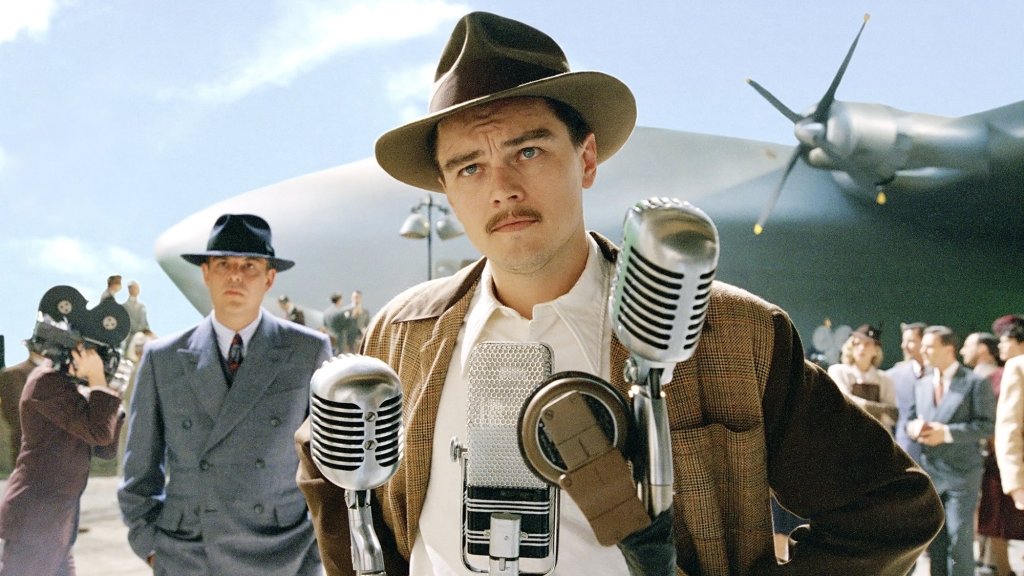
The Aviator (2004) is based on the 1993 non-fiction book Howard Hughes: The Secret Life by Charles Higham, the film depicts the life of Howard Hughes, an aviation pioneer and director of Hell’s Angels. The film portrays his life from 1927–1947 during which time Hughes became a successful film producer and an aviation magnate while simultaneously growing more unstable due to severe obsessive-compulsive disorder (OCD). It stars Leonardo DiCaprio as Howard Hughes, Cate Blanchett as Katharine Hepburn, and Kate Beckinsale as Ava Gardner. The Aviator was released in the United States on December 25, 2004. The film grossed $214 million at the box office. At the 77th Academy Awards, it was nominated for eleven awards, including Best Picture, Best Director, Best Original Screenplay, Best Actor for DiCaprio, and Best Supporting Actor for Alda, winning five: Best Cinematography, Best Film Editing, Best Costume Design, Best Art Direction, and Best Supporting Actress for Cate Blanchett.
 Stand by aaand ACTION!