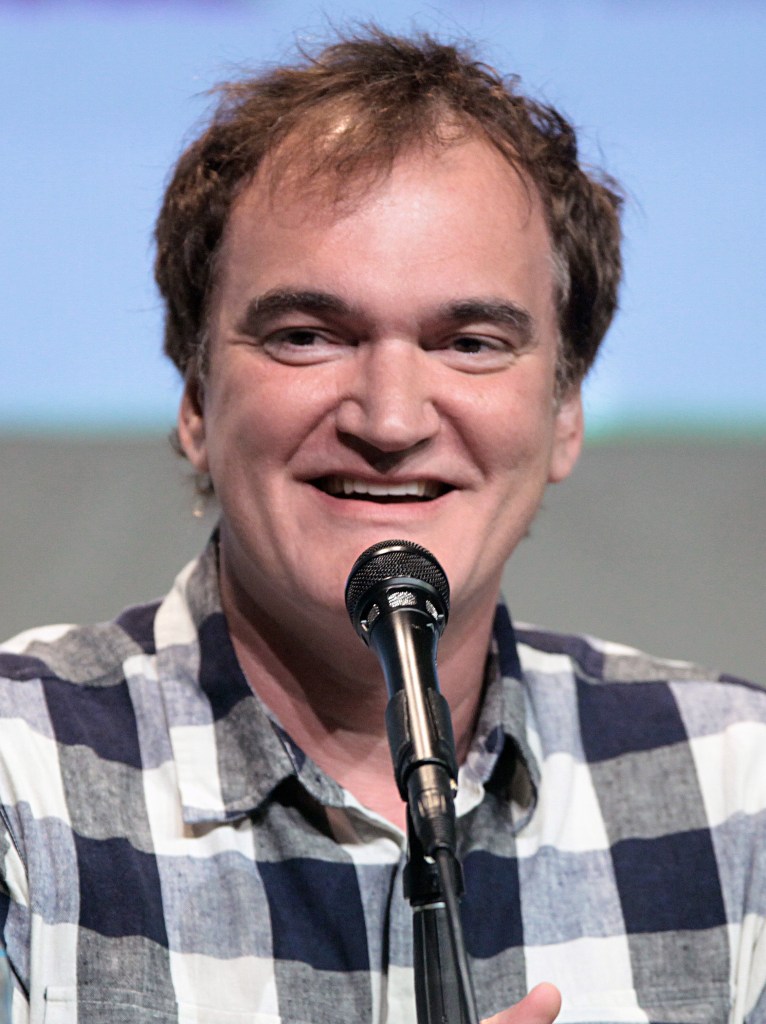
Quentin Tarantino (March 27, 1963) is an American filmmaker, actor, film programmer. His films are characterized by nonlinear storylines, satirical subject matter, aestheticization of violence, extended scenes of dialogue, ensemble casts, references to popular culture and a wide variety of other films, soundtracks primarily containing songs and score pieces from the 1960s to the 1980s, alternate history and features of neo-noir film. His films make cultural references to old movies, so his creations represent a research from the whole cinema. Among Tarantino’s successful films, we mention Pulp Fiction, Kill Bill (Volume 1 and 2), Inglorious Basterds and Django Unchained.
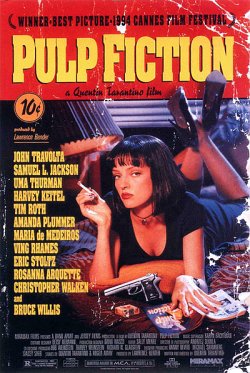
Pulp Fiction (1994) is widely regarded as Tarantino’s masterpiece, with particular praise for its screenwriting. The self-reflexivity, unconventional structure, and extensive homage and pastiche have led critics to describe it as a touchstone of postmodern film. Starring John Travolta, Samuel L. Jackson, Bruce Willis, Tim Roth, Ving Rhames and Uma Thruman, it tells several stories of criminal Los Angeles. The title refers to the pulp magazines and hardboiled crime novels popular during the mid-20th century, known for their graphic violence and punchy dialogue. Tarantino wrote Pulp Fiction in 1992 and 1993, incorporating scenes that Avary originally wrote for True Romance (1993). Its plot occurs out of chronological order. The film is also self-referential from its opening moments, beginning with a title card that gives two dictionary definitions of “pulp”. Considerable screen time is devoted to monologues and casual conversations with eclectic dialogue revealing each character’s perspectives on several subjects, and the film features an ironic combination of humor and strong violence.
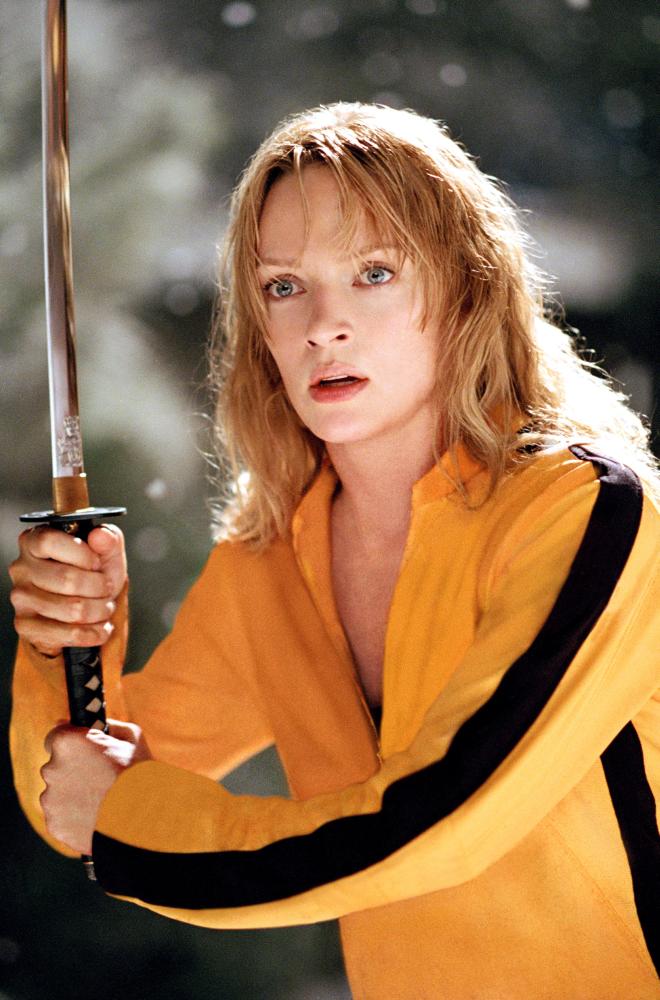
Kill Bill (Volume 1 – 2003; Volume 2 – 2004) is a highly stylized “revenge flick” in the cinematic traditions of kung fu films, Japanes martial arts, spaghetti western and Italian horror. Tarantino conceived Kill Bill as an homage to grindhouse cinema, including martial arts films, samurai cinema and blaxploitation films. It features a Japanese-style animation sequence by Production I.G. It is the first of two Kill Bill films made in a single production; the films were originally set for a single release, but the film, with a runtime of over four hours, was divided in two. Volume 1 became Tarantino’s highest-grossing film up to that point, earning over $180 million at the box office. Kill Bill: Volume 2 was released the next year, on April 16, 2004.
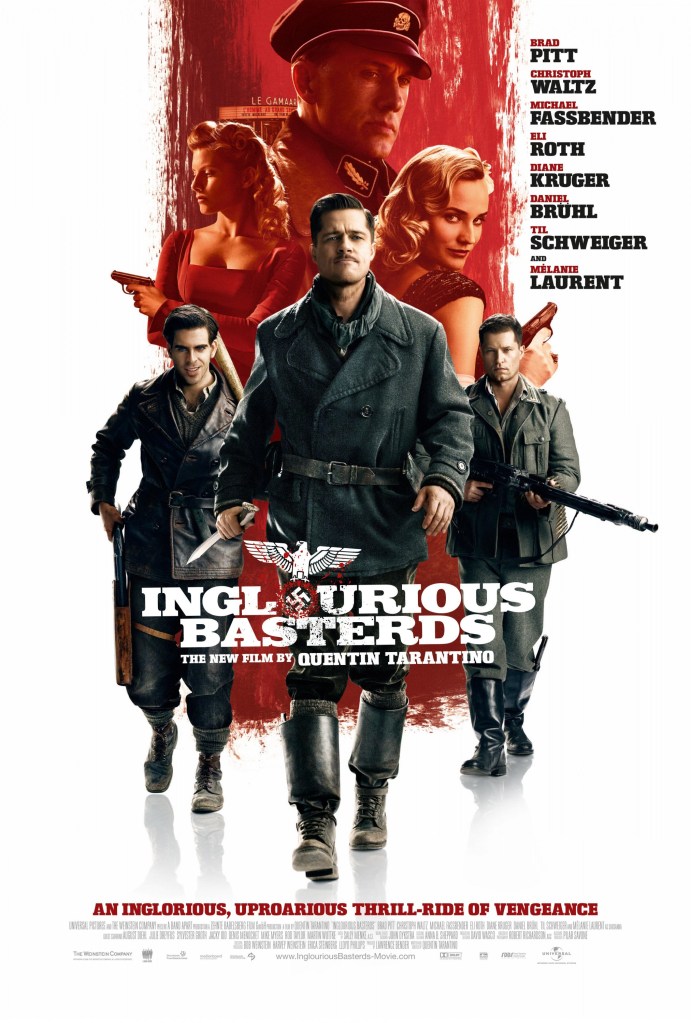
Inglorious Basterds (2009) is a revisionistblack comedywar film starring Brad Pitt, Christoph Waltz, Michael Fassbender, Eli Roth, Diane Kruger, Daniel Brühl, Til Schweiger and Mélanie Laurent. The film tells an alternate history story of two plots to assassinate Nazi Germany’s leadership, one planned by Shosanna Dreyfus (Laurent), a young French Jewish cinema proprietor and the other by a team of Jewish American soldiers led by First Lieutenant Aldo Raine (Pitt). Christoph Waltz co-stars as Hans Landa, an SS colonel tracking down Raine’s group and who is connected to Shosanna’s past. The film’s title was inspired by Italian director Enzo G. Castellari’s macaroni combat film The Inglorious Bastards (1978). Inglourious Basterds grossed over $321 million in theaters worldwide, making it Tarantino’s highest-grossing film at the time, until it was surpassed in box office by Django Unchained (2012) and Once Upon a Time in Hollywood (2019). The film was met with great acclaim, and received multiple awards and nominations, among them eight Academy Award nominations, including Best Picture, Best Director and Best Original Screenplay. For his role as Landa, Waltz won the Cannes Film Festival’s Best Actor Award, as well as the BAFTA, Screen Actors Guild, Critics’ Choice, Golden Globe, and Academy Award for Best Supporting Actor.
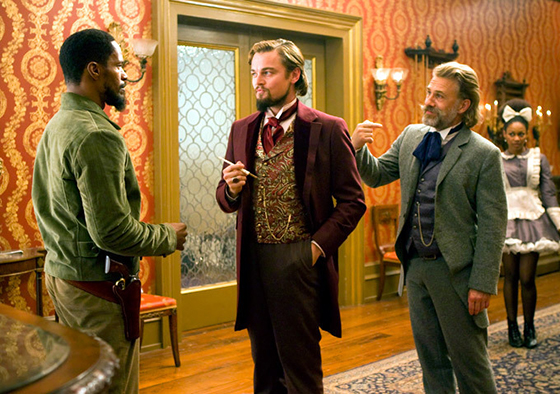
Django Unchained (2012) is starring Jamie Foxx, Christoph Waltz, Leonardo DiCaprio, Kerry Washington and Samuel L. Jackson. Set in the Old West and Antebellum South, it is a highly stylized tribute to Spaghetti Westerns using an obvious revisionist history, in particular the 1966 Italian film Django by Sergio Corbucci, whose star Franco Nero has a cameo appearance. Django Unchained premiered at the Ziegfeld Theatre in New York City on December 11, 2012 and was theatrically released on December 25, 2012 in the United States, grossing over $425 million worldwide against its $100 million budget, becoming Tarantino’s highest-grossing movie to date. The film received numerous awards and nominations, as well as five nominations at the 85th Academy Awards, including Best Picture. Waltz won several awards for his performance, among them Best Supporting Actor at the Academy Awards, Golden Globes and BAFTAs. For his screenplay, Tarantino won an Academy Award, a Golden Globe, and a BAFTA.
 Stand by aaand ACTION!